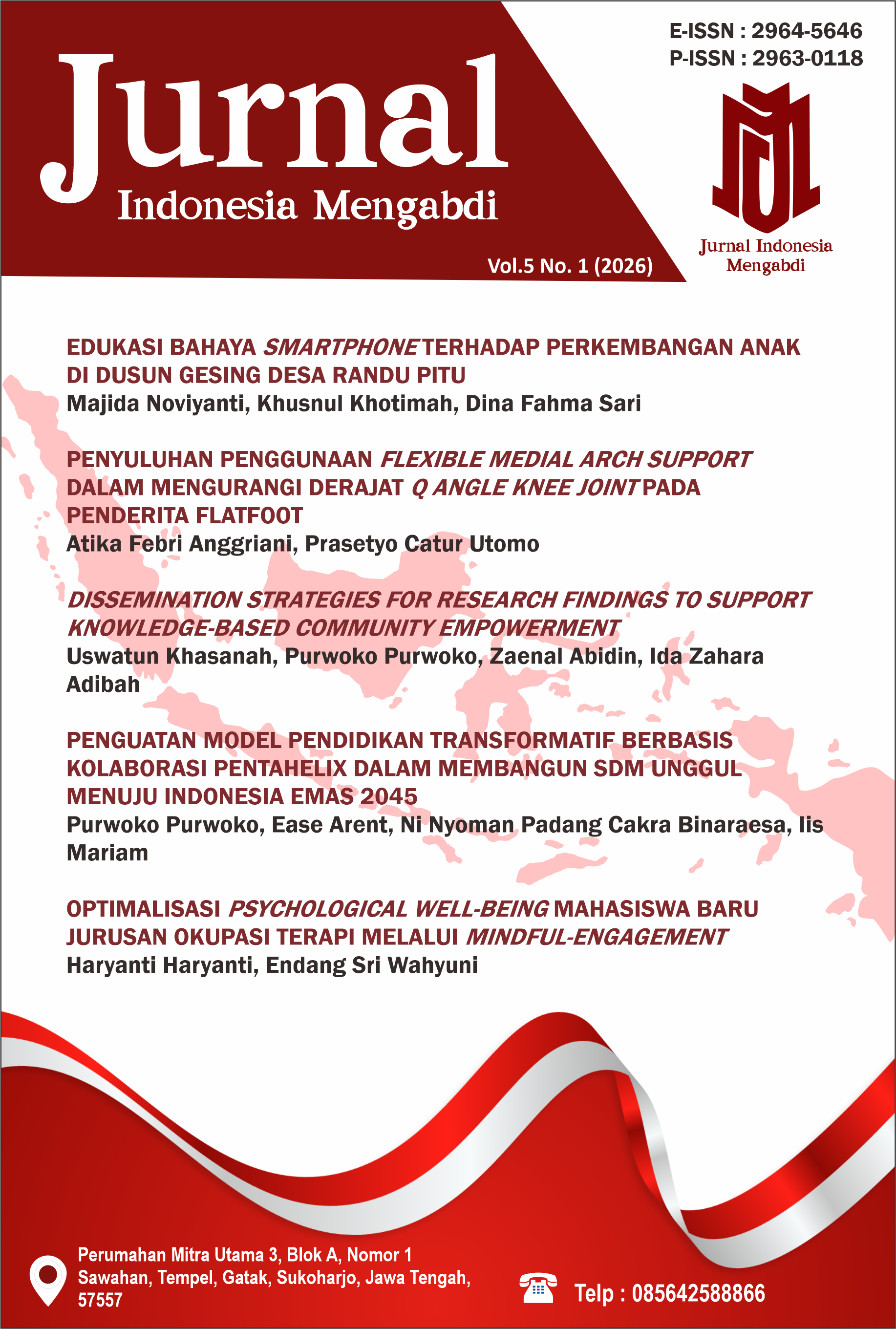
OPTIMALISASI PSYCHOLOGICAL WELL-BEING MAHASISWA BARU JURUSAN OKUPASI TERAPI MELALUI MINDFUL-ENGAGEMENT
DOI:
https://doi.org/10.55080/jim.v5i1.2056Keywords:
Psychological Well-Being; New students; Occupational Therapy; Mindful-engagementAbstract
Objective: To optimize understanding of the importance of psychological well-being for improved academic achievement and to implement mindful activities that support and stimulate psychological well-being.
Method: A pre- and post-test counseling design was conducted with 37 participants. The intervention included workshops, mindfulness training, and discussions. Open-ended and closed-ended questionnaires were administered before and after the intervention.
Results: Participants included 56.76% new students from applied undergraduate study programs and 43.24% diploma III students in the emerging age phase. 81.1% were female and 75.67% were female students. The average understanding score increased significantly from 5.4 to 8.4.
Discussion: Students described the benefits of the intervention, including feeling calmer, more comfortable, and relaxed, with a lighter mental burden on their breathing. Furthermore, when thinking about themselves, they felt happier, more self-aware, had greater self-acceptance, reduced dizziness, a sense of relief, and increased gratitude.
Conclusion: The counseling program on psychological well-being with a mindful-engagement approach helps students understand the importance of optimizing psychological well-being to support their lecture activities.
Downloads
Published
Versions
- 2026-08-06 (2)
- 2026-06-24 (1)