METHODS FOR ENGLISH LANGUAGE TEACHING (ELT)
Keywords:
ENGLISH, ELT, TEACHINGAbstract
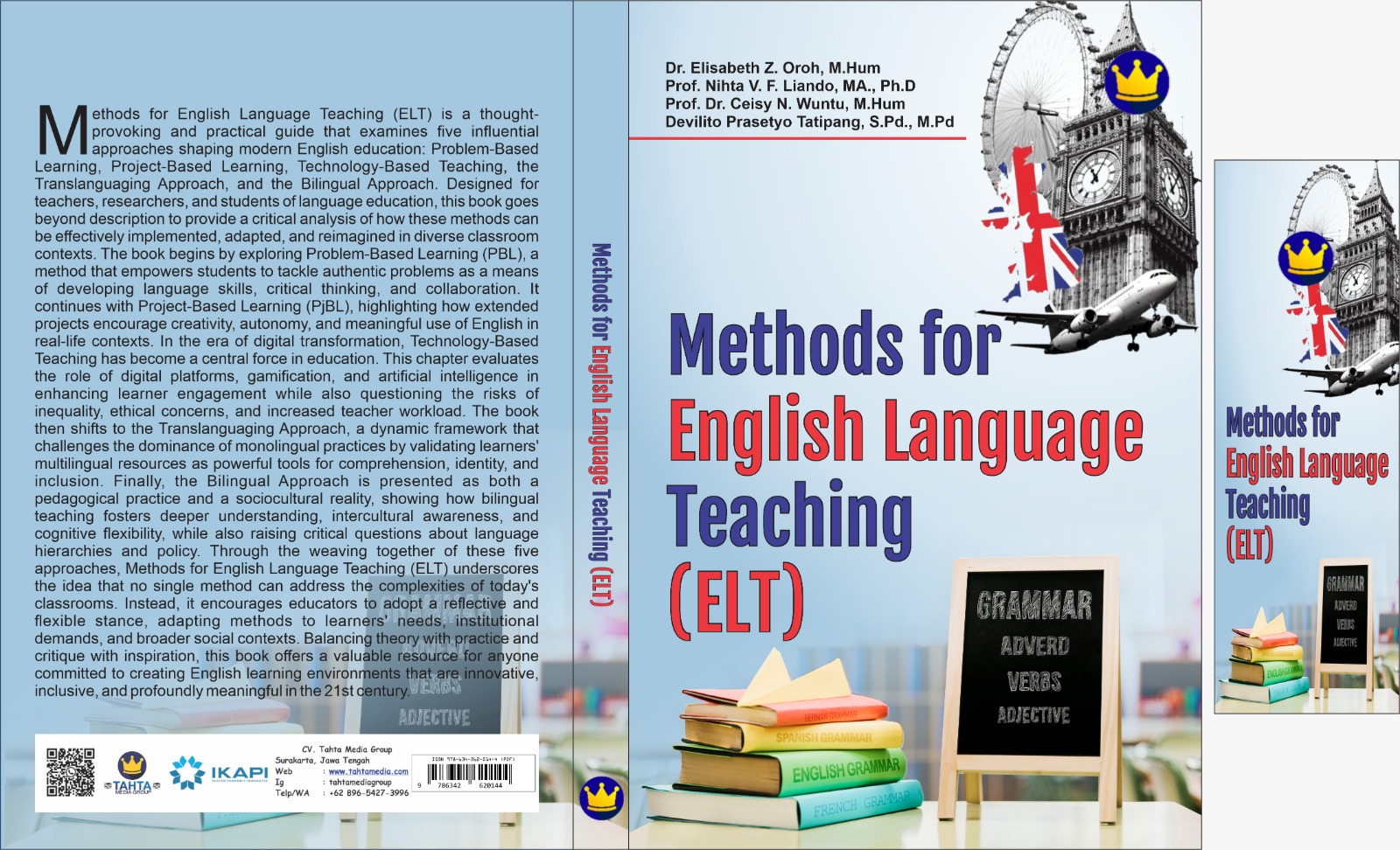
Methods for English Language Teaching (ELT) is a thought-provoking and practical guide that examines five influential approaches shaping modern English education: Problem-Based Learning, Project-Based Learning, Technology-Based Teaching, the Translanguaging Approach, and the Bilingual Approach. Designed for teachers, researchers, and students of language education, this book goes beyond description to provide a critical analysis of how these methods can be effectively implemented, adapted, and reimagined in diverse classroom contexts. The book begins by exploring Problem-Based Learning (PBL), a method that empowers students to tackle authentic problems as a means of developing language skills, critical thinking, and collaboration. It continues with Project-Based Learning (PjBL), highlighting how extended projects encourage creativity, autonomy, and meaningful use of English in real-life contexts. In the era of digital transformation, Technology-Based Teaching has become a central force in education. This chapter evaluates the role of digital platforms, gamification, and artificial intelligence in enhancing learner engagement while also questioning the risks of inequality, ethical concerns, and increased teacher workload. The book then shifts to the Translanguaging Approach, a dynamic framework that challenges the dominance of monolingual practices by validating learners' multilingual resources as powerful tools for comprehension, identity, and inclusion. Finally, the Bilingual Approach is presented as both a pedagogical practice and a sociocultural reality, showing how bilingual teaching fosters deeper understanding, intercultural awareness, and cognitive flexibility, while also raising critical questions about language hierarchies and policy. Through the weaving together of these five approaches, Methods for English Language Teaching (ELT) underscores the idea that no single method can address the complexities of today's classrooms. Instead, it encourages educators to adopt a reflective and flexible stance, adapting methods to learners' needs, institutional demands, and broader social contexts. Balancing theory with practice and critique with inspiration, this book offers a valuable resource for anyone committed to creating English learning environments that are innovative, inclusive, and profoundly meaningful in the 21st century.
ISBN : 978-634-262-014-4
Editor:
Dr. Fergina Lengkoan, M.Pd
Yofri Karisi, S.Pd., M.Pd
Downloads
Published
How to Cite
Issue
Section
License
Copyright (c) 2025 Elisabeth Zuska Oroh, Nihta V. F. Liando, Ceisy N. Wuntu, Devilito Prasetyo Tatipang

This work is licensed under a Creative Commons Attribution-NonCommercial 4.0 International License.